
Apr 9th 2026
How to Pick the Right Grill Turner for the Job
In a busy kitchen or at a high-volume grill station, your turner is more than just a tool—it’s an extension of your hand. From flipping burgers during peak service to handling delicate fish or pressing sandwiches on the flat top, the right grill turner can improve speed, consistency, and control.
Not all turners are built the same. Here’s what to look for when choosing the right one for your operation.
1. LOOK FOR A DURABLE STAINLESS STEEL BLADE
A high-quality stainless steel blade is essential for performance and longevity. In commercial kitchens, turners take a beating—constant contact with hot surfaces, heavy foods, and repeated cleaning.
Stainless steel offers:
• Corrosion resistance
• Strength under pressure
• Easy cleaning and sanitation
For foodservice environments, a well-made blade holds its shape, resists warping, and stands up to daily use without compromise.
2. CHOOSE A BEVELED EDGE FOR EASY LIFTING
A beveled edge is one of the most important features of a grill turner. That slight taper along the edge allows the blade to slide smoothly under food without tearing or sticking.
Benefits of a beveled edge:
• Cleanly lifts burgers, pancakes, and proteins
• Reduces sticking on flat tops and grills
• Improves efficiency during high-volume service
If you’re working a fast-paced line, this feature alone can make a noticeable difference in performance.
3. CONSIDER THE FLEXIBILITY OF THE BLADE
Not all turners should feel the same in hand. Blade flexibility plays a big role in how the tool performs depending on the task. Choosing the right level of flex gives you better control and helps prevent product damage—especially during plating or finishing.
• Rigid blades are ideal for heavier items like burgers, steaks, or bulk flipping
• Flexible blades work better for delicate foods like fish, eggs, or thinner items
4. PICK THE RIGHT SIZE AND SHAPE
Turners come in a variety of sizes and blade shapes, and selecting the right one depends on your station and menu.
Consider:
• Blade width: Wider blades handle larger items like burgers or pancakes
• Blade length: Longer blades offer reach across grills and flat tops
• Shape: Square edges for scraping and pressing, rounded edges for smoother flipping
5. WHAT KIND OF HANDLE DO YOU NEED?
Handle material affects comfort, safety, and performance—especially in high-heat environments.
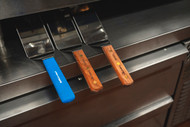
Wood Handles
• Traditional look and feel
• Naturally heat-resistant
• Comfortable grip over long periods
Polypropylene Handles
• Durable and easy to clean
• Textured for slip resistance
• Ideal for sanitation-focused environments
High-Heat Handles
• Designed to withstand extreme temperatures (up to 500°F)
• Perfect for grill and griddle stations
• Maintain performance without breaking down or becoming uncomfortable.
The right grill turner helps you move faster, work cleaner, and maintain consistency through every service. By focusing on blade material, edge design, flexibility, size, and handle type, you can build a setup that works as hard as your kitchen does.
Whether you’re flipping burgers on a packed line or fine-tuning a plated dish, the right turner isn’t just helpful—it’s essential.